
Luxembourg
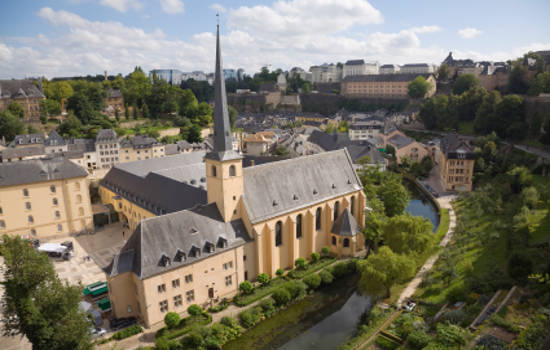
Introduction
Luxembourg, or more officially known as the Grand Duchy of Luxembourg, is a small country found in western Europe. It is surrounded by Belgium, Germany, and France. It is a parliamentary representative democracy with a constitutional monarchy that is ruled by its Grand Duke. Luxembourg is the only remaining country in the world that has a sovereign Grand Duchy.
It is a highly developed and industrialized country and has the highest Gross Domestic Product per capita in the world. The country is a founding member of the European Union, NATO, Western European Union, the OECD and the United Nations. Its capital, which also shares the same name of the country and is also its largest city, Luxembourg, is the country's seat of politics and is also home to some of the institutions and agencies in the European Union. It is in the middle of the cultural division of Europe, located between the Romance Europe and Germanic Europe.
People
The people of the country are referred to as Luxembourgers, and its native population has Celtic origins mixed with French and German. It has a population of roughly half a million. The population of its immigrants increased greatly in the 20th century with the coming of immigrants from France, Belgium, Germany, Portugal, and Italy. In 2001; there were a total of 58,657 people of Portuguese descent. Yearly, more than 10,000 new immigrants come into Luxembourg and most of them are from European origin, which amounts to 37% of the country's total population.
Geography
In terms of size, the country is a small country in Europe, ranking 175th in size among 194 countries around the world. Its size is roughly 998 square miles. It is bordered in the east by Germany while it is enclosed by the Lorraine region of France in the south.
One third of the country from its northern area is known as the Oesling and is predominantly composed of hills and low set mountains including the Kneiff. The region is not much populated and only has one town, Wiltz, with a population size of nearly four thousand. The remaining southern two-thirds is called the Gutland and is more populated than its northern counterpart.
There are 12 named cities in Luxembourg, although they are similar to communes. Besides the capital of Luxembourg City, some other notable cities are Esch-sur-Alzette, Diekirch, Differdange, Echternach and Wiltz.
History
The history of Luxembourg starts off with the acquisition of Lucilinburhuc, now known as the Luxembourg Castle, by Count of Ardennes, Siegfried in 963. Around the castle, the town gradually developed and grew, and it became a center and small state with high strategic value. By the time the 14th and 15th centuries came in, three members from the House of Luxembourg already reigned as Holy Roman Emperors.
By 1437, the House of Luxembourg suffered a huge crisis when there was a lack of male successor to assume the throne. This in turn resulted in the selling of the area to Philip the Good of Burgundy. In the succeeding decades, the Luxembourg Castle steadily grew and strengthened because of those who occupied it, mainly the Bourbons, the Habsburgs, the Hohenzollerns and the French. After Napoleon's downfall in 1815, the country was disputed by Prussia and the Netherlands. Luxembourg was then formed as a Grand Duchy under personal union with the Netherlands at the Congress of Vienna in 1815.
Famous Attractions
If you are planning to go on a tour of Luxembourg, then the first tourist spot on your list
would have to be the Chateau of the Counts of Luxembourg in Luxembourg City. On top of the promontory heralded as the Bock, the castle dates back as far as 963. The castle itself was decimated by fire in 1459 and the ruins were incorporated into a new system of fortifications.
Another good place to look at would be the Casemates, which are a labyrinth of defensive passageways that helped make the military might of Luxembourg impressive. The first tunnels were built in the year 1644 during the Spanish domination era. The galleries were 14 miles in length and were enlarged forty years later by the Vauban, the French military engineer, and during the 18th century by the Austrians.
Another place to visit would have to be the Valley of the Seven Castles which is a small triangular area northwest of the city and home to Europe's most spectacular castles.
Nightlife
Then again, if you are after Luxembourg's night time destinations, then you surely will not be disappointed. The Melusina is a large nightclub complete with a dance floor in the center. It costs around 12 Euros for the cover charge, but it is well worth it because the deejays are very good.
Another great place would be the Apotheka. It is a dance club in the cellar of a restaurant bearing the same name. They have good music and the atmosphere is really hot and sizzling. The deejay booth can be located hanging right over the dance floor, which makes this place a cool and hip night scene.
Culture
Most of the citizens here are trilingual and can speak German, French and their national language, Luxembourgish. The country is known for being folkloric and traditional and one of the most notable is the Echternach Dancing Procession which is held annually.
Cuisine
Food at Luxembourg has heavy influences from its nearby countries, mainly France and Germany. With the rise in the Italian and Portuguese immigrants, they have also added to the pool of Luxembourg's cuisine. Among their many dishes are pastries, cheese, and fresh fish that are caught from their local rivers. Ardennes ham smoked in saltpeter and smoked neck of pork with broad beans are also a staple. They are also accompanied by fried small river fish, liver with sauerkraut, boiled potatoes, sausage with mashed potatoes and green bean soup. French cuisine is also prominent on most restaurant menus although German and Belgian cooking is not as popular.
Another noteworthy specialty is the Thuringer, which is an inexpensive, small sausage that is similar to the German bratwurst although a bit spicier. The Bouneschlupp, which is green bean soup and the Gromperekichekcher, which is a spiced potato pancake with onions and parsley and then deep fried, are also popular specialties.


 hotels

 Flights

